

 Partners News
Combatting migrant smuggling: 25 law enforcement officials enhanced their skills in behaviour analysis


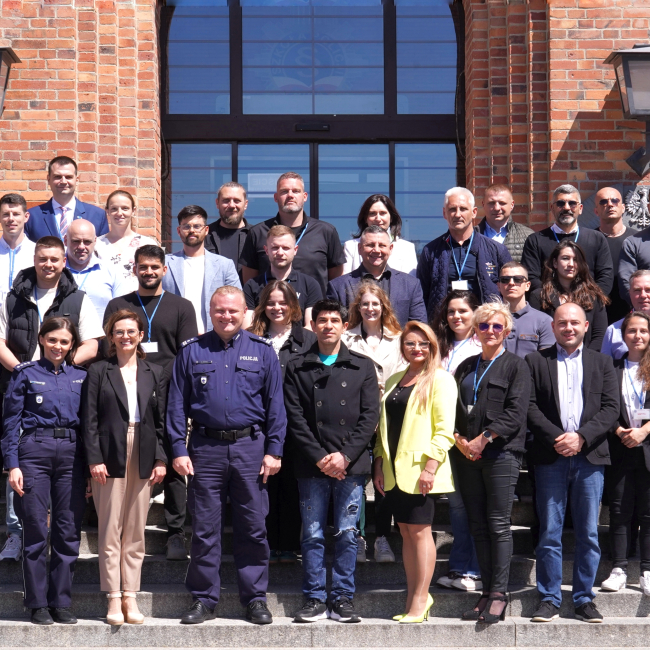
Law enforcement training at EU level provides a unique forum to exchange information, experiences and develop good practices. This is particularly important for law enforcement officials operating in crime areas such as migrant smuggling, where cross-border cooperation, specialised knowledge and expertise is key for success.
The Police School in Piła, Poland hosted CEPOL course 06/2025/ONS: Behaviour analysis in the context of migrant smuggling (19-23 May, 2025) , a blended learning activity supported by experts from Romania, Spain, Greece and Poland and from EU agencies such as CEPOL and Frontex. 25 law enforcement officials from 18 EU Member States representing police, border police and customs services enhanced their skills and gained knowledge they can apply in their daily work.
The training included both theoretical and practical classes, with an emphasis on hands-on exercises, as they are the best way of acquiring practical skills. The following blended-learning methods were used during the classes:
- Group discussions to develop a common position;
- Interactive presentations, which in addition to the theoretical introduction to the topic were also intended to encourage asking questions;
- Role play activities during practical classes with cognitive interviews;
- Practical sessions in behaviour analysis (face-to-face classes and behaviour analysis from recordings);
- Practical classes in verbal content analysis, including Criteria Based Content Analysis (CBCA). Before the classes, participants were given a scientific article on CBCA and 3-page witness statements to read, while during the classes they performed practical analysis of statements;
- VR presentation, which is an amazing way to do practical exercises in VR reality, and after the classes, i.e. ethical profiling issues were discussed.
Topics covered during the course included: methods and strategies of behaviour analysis, the distinction between behaviour analysis and profiling, cognitive interview, effective interview and behaviour analysis in the context of migrant smuggling: the importance of rapport and asking questions rules, perceptual limitations and biases, individual differences and cultural awareness, 1st and 2nd line interviews, protection of fundamental rights, and mental disorders.
Why is behaviour analysis important for law enforcement officials combatting migrant smuggling?
It helps understand the motivations, behavioural patterns and methods of action of perpetrators of similar types of crimes. It supports effective interviews, allows law enforcement officials to interpret emotional reactions and non-verbal signals, which in certain situations may indicate insincerity of statements. Behaviour analysis helps assess the extent to which given statements are consistent with typical psychological reactions. It also helps assess risk factors, particularly in the context of migrant smuggling.

Loading data
Related Tags
EMPACT training activity

Combating new forms of organised crime requires more cooperation between police and gendarmes, customs officers, border guards, judges, and prosecutors. EU institutions, agencies and Member States work together to tackle organised and serious international crime through a permanent and key instrument: the European Multidisciplinary Platform Against Criminal Threats (EMPACT).
CEPOL plays a crucial role in the EMPACT mechanism through the provision of specialised training and the identification of training needs within each common security threat. Every year, CEPOL provides a comprehensive training package for each common EU crime priority consisting of onsite, online and exchange training activities.
Check more of CEPOL's EMPACT training activities here.


